
FitHaven journal
Home Sauna Buying Guide: Choose With Confidence
A home sauna is easier to choose when you decide the constraints first. Start with the session you want, the room you have and the installation your home can support. The models worth comparing become obvious after that.
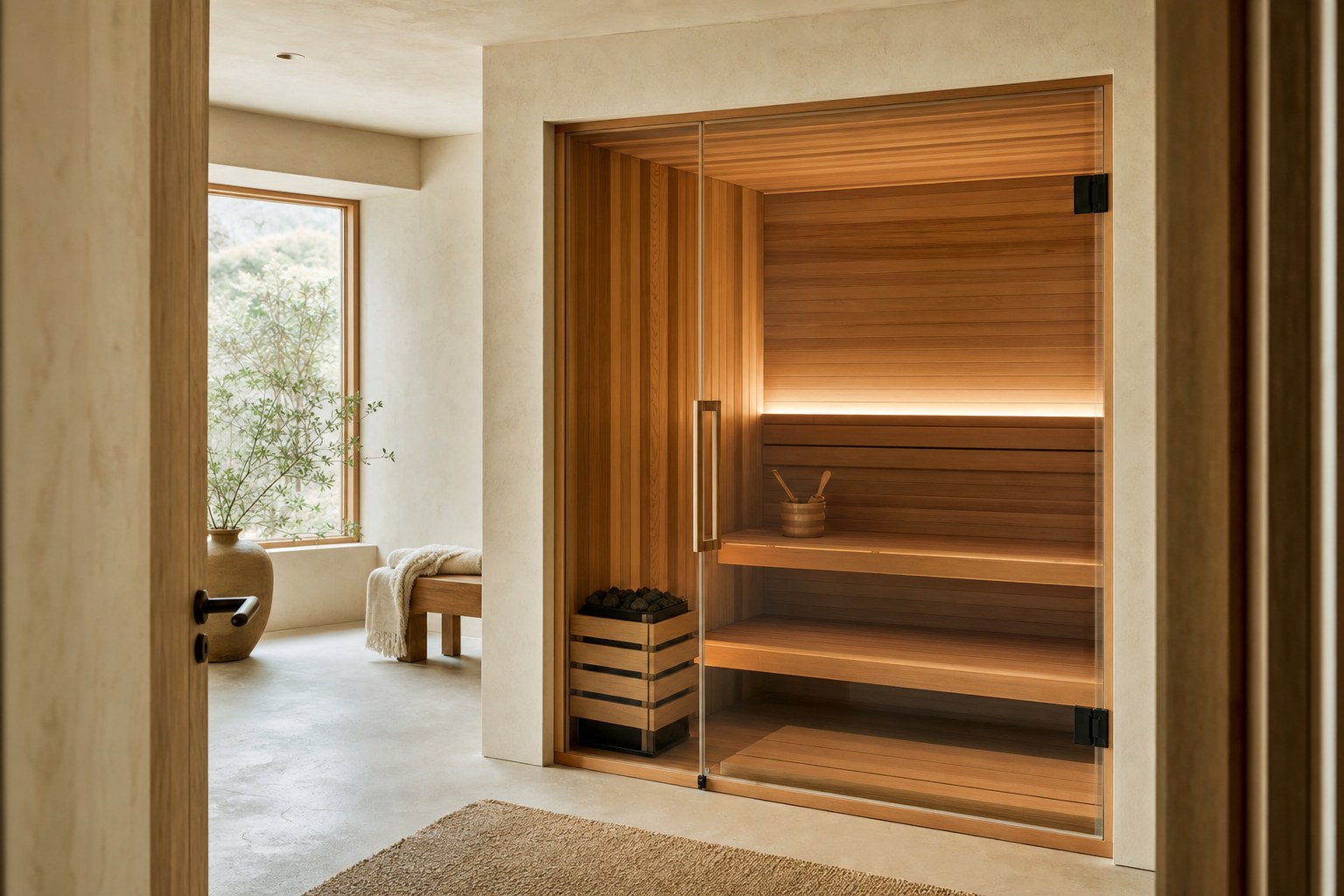
It is tempting to start with finishes, lighting and a long list of features. Those details matter later. The first decision is simpler: choose the kind of heat and ownership experience that works with your real life. A sauna that fits your space, power and routine has a far better chance of becoming part of your week.
This home sauna buying guide puts the practical decisions in order, so you can narrow the field without getting lost in product pages.
1. Start with the experience you want
Traditional and infrared saunas are not two versions of the same thing. A traditional sauna warms the room with a heater, usually using stones. Water can be poured over those stones for a burst of steam. Infrared uses radiant panels to warm the person in the cabin more directly, at a lower air temperature.
Choose traditional if the hotter room, the ritual of the stones and the feeling of a classic sauna are the point. Choose infrared if a gentler-feeling heat and an indoor-friendly daily routine appeal more. The best choice is not the one with the longest feature list. It is the one you will look forward to using.
2. Let placement rule options in and out
Decide where the sauna will live before you become attached to a model. Indoors may mean a basement, a finished garage, a home gym or a room with a sensible path for delivery and ventilation. Outdoors can create more freedom around size and a natural separation from the main house, but it introduces site preparation, weather exposure and the path from your electrical panel.
Measure more than the spot where the sauna will stand. Record ceiling height, wall-to-wall width, door swing, walking clearance and the route from the street or driveway to the final location. If a crate cannot make the turn or an exterior door cannot clear the panels, a product that looks right on paper can become the wrong project.
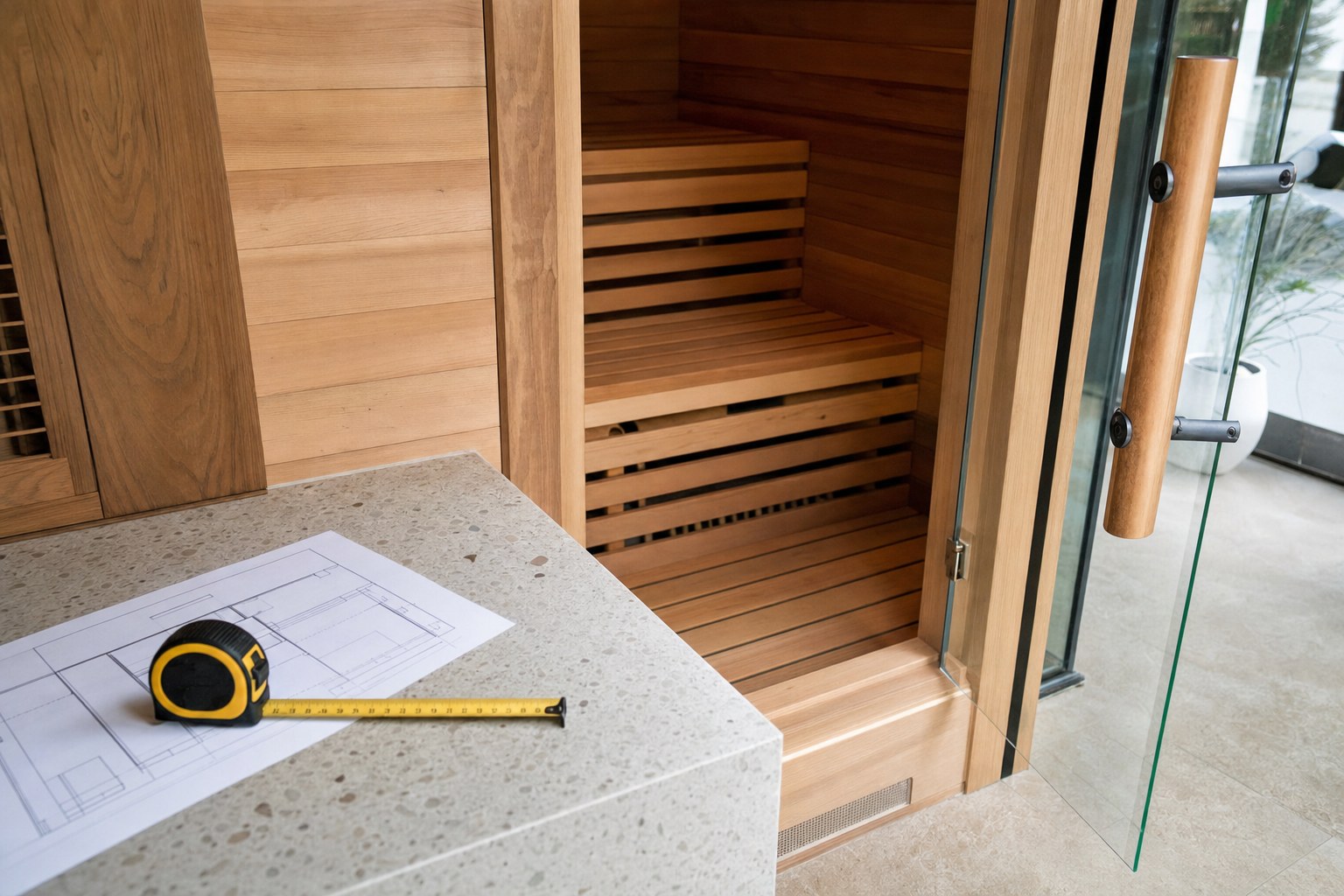
Also think about frequency. A convenient indoor setup can win because it removes excuses. An outdoor sauna can be the better fit when you want a dedicated retreat, have room for a stable base and are comfortable with a more involved installation. Neither option is automatically more luxurious. The right one is the one that makes the whole routine feel easy to keep.
3. Size for normal use, not an imaginary crowd
“Two-person” describes capacity, not necessarily comfort. Think about how you will actually sit: upright, leaning back or stretching out. Consider whether a partner will use it at the same time regularly, not occasionally. A larger cabin costs more to buy, heat and place, while an undersized one can feel like an obligation instead of a refuge.
For a traditional sauna, room volume matters because it guides heater selection. Harvia’s heater guidance notes that room volume and non-insulated surfaces such as glass or stone affect the power requirement. Treat a manufacturer's specified room-size range as a limit to respect, not a loose suggestion.
Ask the seller for the exterior dimensions, interior bench dimensions, ceiling height and model-specific safety clearances. Then compare those answers against your room sketch. Good decisions happen on measurements, not a rendering.
4. Confirm power before you order
Electrical planning is where an attractive choice can become expensive fast. Some compact infrared cabins can work with a standard outlet, while many traditional installations and larger cabins call for a dedicated circuit or hardwired connection. Requirements vary by model, so the product manual is the source of truth.
Before ordering, identify the nearby power source, the approximate path back to the electrical panel and any potential construction work. Then share the model documentation with a qualified local electrician. They can assess the exact circuit, breaker, wire run and local permit requirements. That conversation should happen before delivery, not when the crate is already in the driveway.
For outdoor projects, add the electrical route to the site plan. The neatest place for a sauna is not always the least complicated place to power it.
5. Treat heater, ventilation and clearances as one system
A traditional sauna is a heat system, not merely a wood enclosure with a heater inside. Heater capacity, placement, clearances and airflow all shape how the room performs. A model that is correctly sized for the room will generally give you a better start than one selected for an attractive control panel or decorative glass.
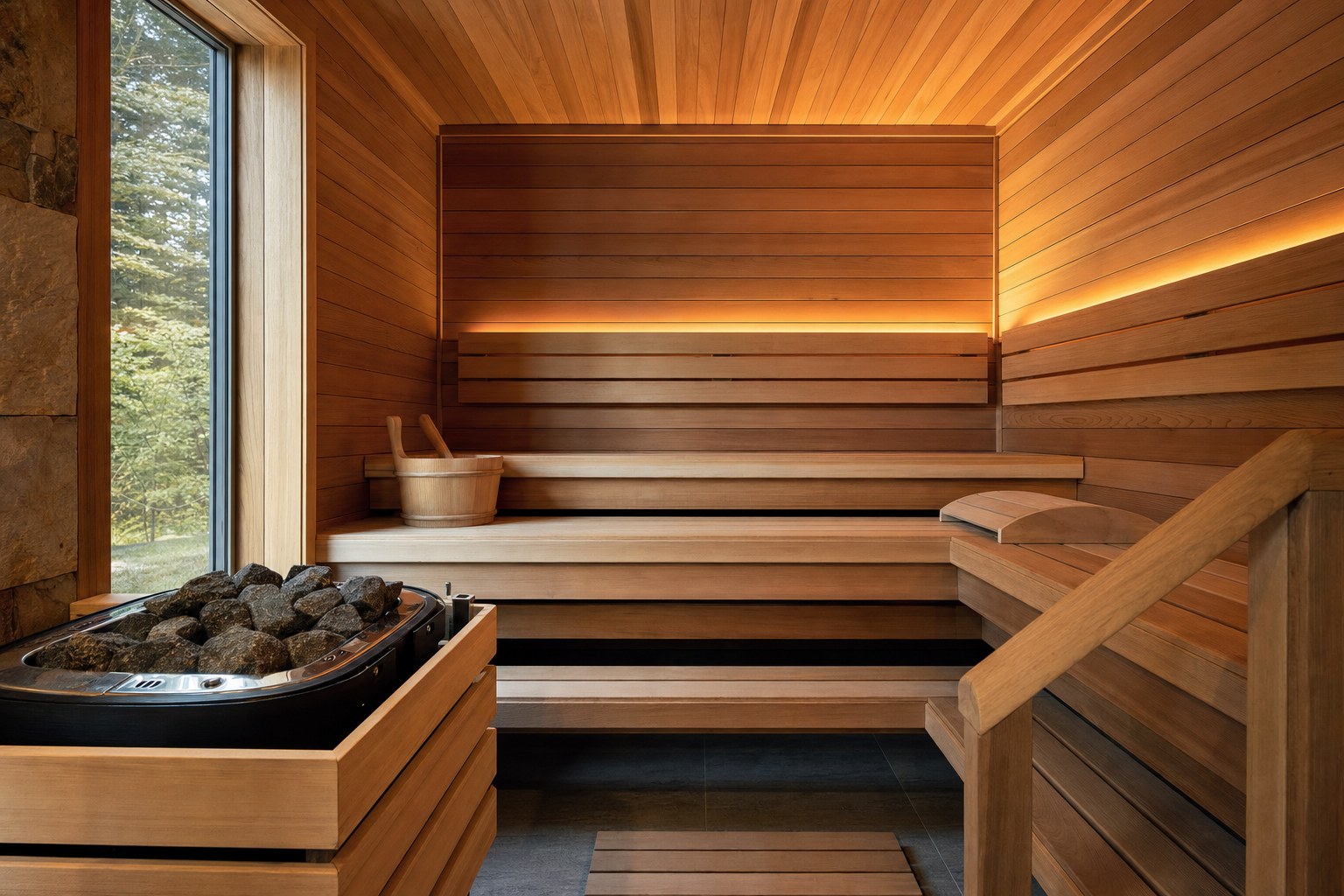
Ventilation is part of the same conversation. Manufacturer ventilation guidance shows why intake and exhaust placement should follow the specific sauna and heater instructions. Do not improvise clearances or airflow details. Use the installation manual and the professionals responsible for your project.
That is also why a lower sticker price can be misleading. A better-fitting heater, appropriate materials and a clear installation plan are usually worth more than novelty lighting or a speaker you may never use.
6. Budget for the complete project
The sauna itself is only one line in the budget. Build a complete number that includes the unit, delivery, installation, electrical work, potential permits, outdoor base preparation, accessories and the materials needed to keep the space clean and dry. If you are comparing two models, compare the complete installed cost, not just the product price.
Ask about shipping method, curbside versus room-of-choice delivery, assembly, warranty coverage and who handles service after the sale. A well-supported product can be the stronger long-term purchase even if another option appears cheaper at checkout.
Plan for maintenance, too. Keep the interior clean, follow the manufacturer’s care instructions and make sure the room can dry properly between uses. Ownership should feel calm and manageable, not like another house project on the list.
7. Build a short list, then compare with purpose
Once the earlier decisions are made, your shortlist should be pleasantly small. Compare only models that fit your chosen heat style, available space and electrical reality. Then look at wood quality, bench layout, door design, warranty, support and delivery plan.
- Does the sauna fit the measured location and delivery route?
- Does the heater or infrared system match the manufacturer’s stated room requirements?
- Are the electrical requirements clear and practical for your home?
- Have you included delivery, installation and site work in the total?
- Can you get support for questions before and after the order?
If the answer to any of those is unclear, pause there. The right next step is more information, not a faster checkout.
How FitHaven can help
FitHaven’s sauna collection is a useful place to begin once you know the kind of setup you are planning. For a broader outdoor project, explore Outdoor Oasis. If you want help thinking through product details, delivery or fit for your space, contact FitHaven’s support team before you order.
Choose the home sauna that belongs in your routine, not just the one that looks best in a product grid. A clear plan gives you a much better chance of enjoying it for years.
Frequently asked questions
What should I look for when buying a home sauna?
Start with where it will live, the kind of heat you want, the number of people who will use it most often, and the power available at the installation spot. Then compare the sauna's room-size rating, heater requirements, materials, delivery plan and warranty.
Is infrared or traditional better for a home sauna?
Neither is universally better. Infrared is often a practical choice for lower-temperature indoor sessions, while a traditional sauna suits buyers who want hotter air and the option to pour water over heater stones. The right choice is the one that matches the experience you will use.
Do I need an electrician for a home sauna?
Many traditional and larger sauna installations need a dedicated circuit or hardwired connection. Confirm the exact electrical requirements with the manufacturer's documentation and have a qualified local electrician assess the installation before ordering.
How much room should I plan around a home sauna?
Use the manufacturer's installation guide, not only the exterior product dimensions. Account for door swing, required clearances, service access, ventilation, delivery route and the space needed to step in and out comfortably.
For safe use, follow your sauna’s instructions, stay hydrated and avoid use if you feel unwell. Cleveland Clinic’s sauna safety guidance recommends discussing sauna use with a healthcare professional if you have relevant medical concerns.
Related reading

Home sauna
Infrared vs. Traditional Sauna: Which Fits Your Home?
Compare infrared and traditional saunas by heat, room planning, installation and the ritual you want to keep.
Read the comparison →
Home sauna
Home Sauna Dimensions: Plan the Room First
A practical guide to measuring a home sauna project, from interior comfort and door swing to delivery access and model-specific clearances.
Plan the room →