
FitHaven journal
Cold Plunge Dimensions: Plan Your Space First
A cold plunge does not need a huge room. It needs an honest plan for the tub, the route in and the everyday space around it.

“Will it fit?” sounds like a simple question, but the product dimensions are only the start. A cold plunge can fit inside a drawn rectangle and still create a difficult delivery, a blocked doorway, an awkward entry or a care routine that becomes tiresome. The more useful question is whether the complete setup fits the way your home works.
That complete setup includes the vessel, the people using it, the cover, nearby equipment, a clear approach, water-care access and the route from delivery point to final location. It also includes the weight after the system is filled, not merely the dry weight on a product page. Measuring these pieces before browsing finishes or temperature features keeps the shortlist grounded in models that can genuinely belong in the space.
Start with the interior, then check the exterior
The first measurement is about the person, not the room. Look at the usable interior length, width and depth, then picture the way the intended user will sit or recline. A long exterior shell does not automatically create a generous interior. Thick insulation, steps, a seat shape, a sloped back or integrated equipment can all change the space that is actually available inside.
There is no standard cold-plunge size that fits every household. A one-person model can be a focused, efficient choice for an individual routine. A shared system may need a different interior shape or more room around it for two people to approach comfortably, even when they will not use it simultaneously. Write down who will use the plunge, how they prefer to enter and whether they need to stretch or sit upright. Those answers are more useful than a capacity label alone.
Use exact dimensions from the model’s current documentation, not a category average. For perspective, the published Hot Spring Vigor owner’s manual lists a single model at 88 by 42 inches with a 29-inch height. That is an example of how much a compact-looking recovery system can vary in its footprint. It is not a universal sizing rule and should not replace the specifications for the model you are considering.

Draw an operating zone, not just a footprint
Once the exterior dimensions are clear, mark the tub’s footprint on the floor with painter’s tape. Then add the parts that are easy to forget: the cover’s path, the place you stand to enter and exit, access to a filter or controls, and the room needed to clean the surrounding area. If the model uses separate equipment, include its location and the route for any connections exactly as the manufacturer specifies.
Walk the space as if the plunge were already installed. Open the nearest door. Carry a towel. Stand where you would remove the cover and where you would set it down. Reach the places you need to reach for normal care. This simple rehearsal exposes a plan that is technically possible but impractical in daily use.
A small amount of open floor can matter more than squeezing in a larger vessel. Keep a clear route to the entrance and resist placing the plunge where an open door, stored weights or a second piece of recovery equipment cuts through the approach. If it will sit beside a training zone, the home gym layout guide offers the same useful principle: plan the moving body before you place the object.
Measure the delivery route in both directions
The route into a home is often the measurement that decides a shortlist. Start at the delivery point and trace the path to the final location. Record every gate, exterior door, hallway, stair, landing, interior door, tight turn and low overhead point. A product that fits through the final room doorway may still fail at a narrow hall or a sharp turn before it gets there.
Do not assume the tub will arrive in the same orientation shown in a product photograph. Ask the seller for current delivery guidance, packed dimensions and any extra clearance their equipment requires. Hot Spring’s pre-delivery resources for its Vigor cold plunge are a useful illustration of the right habit: delivery planning belongs beside the exact model documentation, not an estimate based on a similar product.
Outdoor access deserves the same care. Measure gates, pathways, grade changes and the route around the home. Consider where a delivery team can safely work without crossing fragile landscaping or an unfinished surface. If the route is uncertain, resolve it before ordering. A clear delivery plan is kinder to the project, the property and everyone involved on the day.

Include filled weight and the surface beneath it
Water changes the project quickly. A dry weight tells you what the equipment weighs before it is filled. It does not tell you what the floor, deck or patio supports during normal use. The exact water capacity, shell weight, accessories and user weight all belong in the conversation.
Again, model-specific documentation is the decision source. The same Vigor manual lists a filled weight of 1,460 pounds for that model, including an assumed user. The point is not to borrow that number for another plunge. It is to see why a filled-weight check deserves its own line in the plan. An installer, builder or other qualified local professional can advise where a particular surface raises questions about load, drainage or preparation.
For an indoor setting, consider the finished floor and the pathway water will take during normal care. For an outdoor setting, consider the base, drainage, weather exposure and maintenance access. FitHaven’s home cold-plunge planning page is a helpful companion for comparing the wider setting, while the manufacturer documentation should settle the requirements of a final model.
Choose the location before you compare finishes
Indoor and outdoor settings ask different questions, even when the same tub could technically work in either place. Indoors, look at the path from the nearest changing area or training space, the finished surface underfoot and how the room will feel after a wet session. The best location is not necessarily the largest empty corner. It is the one that supports a calm approach, a clear exit and an ownership routine that does not interrupt the rest of the home.
Outdoors, the approach begins earlier. Consider the path from the house, the distance from a changing area, the surface under the system and how weather affects the routine. A beautiful patio can still be the wrong fit if the route is slippery, the base is unresolved or every water-care task requires moving equipment across the yard. FitHaven’s Outdoor Oasis collection can help you imagine the broader setting, but the final location still has to meet the exact product guidance.
In either setting, leave the location uncluttered for a few days before you order. Walk the route at the time you expect to use it. Notice what happens with a towel, a robe, a door opening or another person passing through. The goal is not to create a showroom. It is to choose a location that feels straightforward on an ordinary morning or after a workout.
Leave room for the system to breathe and be cared for
A cold plunge is not a piece of furniture that can be pushed into the last open corner. Every system has its own needs for service access, ventilation, filtration, connections and cleaning. Treat those requirements as part of its dimensions. If a product manual names a clearance, it is not spare space to reclaim for a shelf or a basket.
Plan where the cover goes during use and where towels, water-care supplies and a non-slip entry surface belong. Keep electrical work and water in their proper lanes. The Consumer Product Safety Commission explains why wet locations and electrical equipment deserve special care around pools and spas in its electrical-safety guidance. Follow the exact product instructions and use qualified local help for electrical, plumbing or structural work.
Care also needs a realistic rhythm. Read the model’s water-care guidance before buying, then decide whether the routine fits the household. FitHaven’s cold-plunge maintenance guide can help frame the ownership questions, but it does not replace the approved instructions for the exact system.

Compare dimensions on one page
When product pages start to blur together, put the important measurements in one simple note. Create a column for each shortlisted model, then record the interior dimensions, exterior footprint, height, water capacity, dry weight, filled weight, delivery dimensions and published clearances. Add the final location and the narrowest point on the delivery route beside each option. A model should remain on the list only when every essential measurement has an answer.
This is also a useful moment to separate confirmed information from assumptions. If a product page does not state a clearance, service requirement or packaging detail, do not fill the gap with a number from another brand. Ask before you decide. A missing specification is a question to resolve, not an invitation to improvise around a substantial piece of equipment.
The same comparison method works when a home includes more than one recovery system. A sauna, cold plunge and changing area may look cohesive in a concept image, yet the room needs enough open space for every door, cover and person to move comfortably. The home sauna dimensions guide offers a parallel room-first approach when heat is part of the wider plan.
Use a simple measuring sequence
Good measurements turn an overwhelming product search into a short, useful comparison. Take the same notes for every model, then compare only the candidates that survive the real-space test.
- Measure the final location: length, width, height, doors, nearby fixed features and the usable approach.
- Measure the full delivery route, including the narrowest width, tightest turn and lowest overhead point.
- Record the exact product footprint, height, interior dimensions, cover requirements and published clearances.
- Ask for packed dimensions, delivery guidance, dry weight, water capacity and filled weight for the selected configuration.
- Mark the footprint and operating zone at full size, then walk through a normal arrival, use and care routine.
- Confirm the finished surface, water path, electrical requirements and local professional input before committing to a location.
Do not worry if that process removes a model from the list. A model that does not fit the room or route is not a near miss. It is a useful answer that saves time, cost and frustration later. The right cold plunge is the one whose dimensions leave the surrounding space calmer, not more constrained.
How FitHaven can help
Once you have the measurements, browse FitHaven’s current cold-plunge collection with a clearer eye. Compare the details that affect the finished plan, then keep the exact model documentation beside your room notes.
For help reviewing current options and delivery considerations, contact FitHaven’s support team. For personal health questions, use a qualified healthcare professional. For installation, electrical, water-care and structural questions, rely on the chosen manufacturer’s current guidance and the appropriate local professionals.
Frequently asked questions
What size cold plunge should I get?
Start with the interior space that lets the intended user sit or recline comfortably, then compare the full exterior footprint, height, filled weight and published service clearances. There is no useful universal size because the shape, capacity, chiller arrangement and installation requirements vary by model.
How much room should I leave around a cold plunge?
Use the selected model’s current documentation as the final answer. Plan more than the shell itself: you need a clear approach, room to remove a cover, access for routine care, the space required by any separate equipment and a route that does not force you to step over hoses or obstacles.
Can a cold plunge fit through a standard doorway?
Some can, but exterior product dimensions alone do not prove it. Measure the narrowest door, hall, turn and overhead obstruction on the delivery route, then compare those measurements with the seller’s delivery and packaging guidance for the exact model.
Does a filled cold plunge weigh much more than the product listing suggests?
Yes. The dry product weight does not include water or the person using it. Ask for the filled weight and any surface-load guidance for the exact model, then involve an appropriately qualified local professional whenever the site, deck, floor or installation raises a structural question.
Related reading
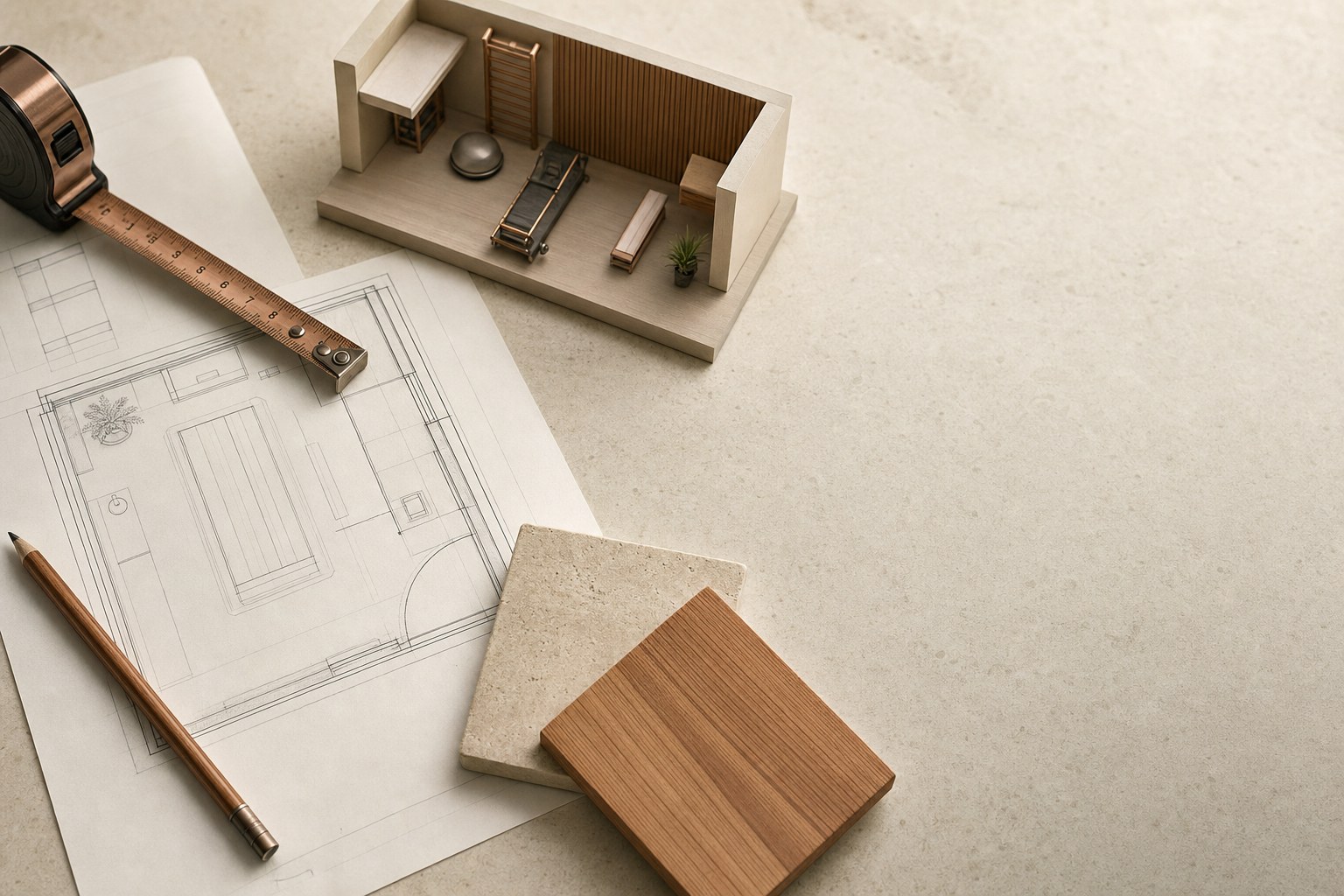
Home sauna
Home Sauna Dimensions: Plan the Room First
A practical guide to measuring a home sauna project, from interior comfort and door swing to delivery access and model-specific clearances.
Plan the room →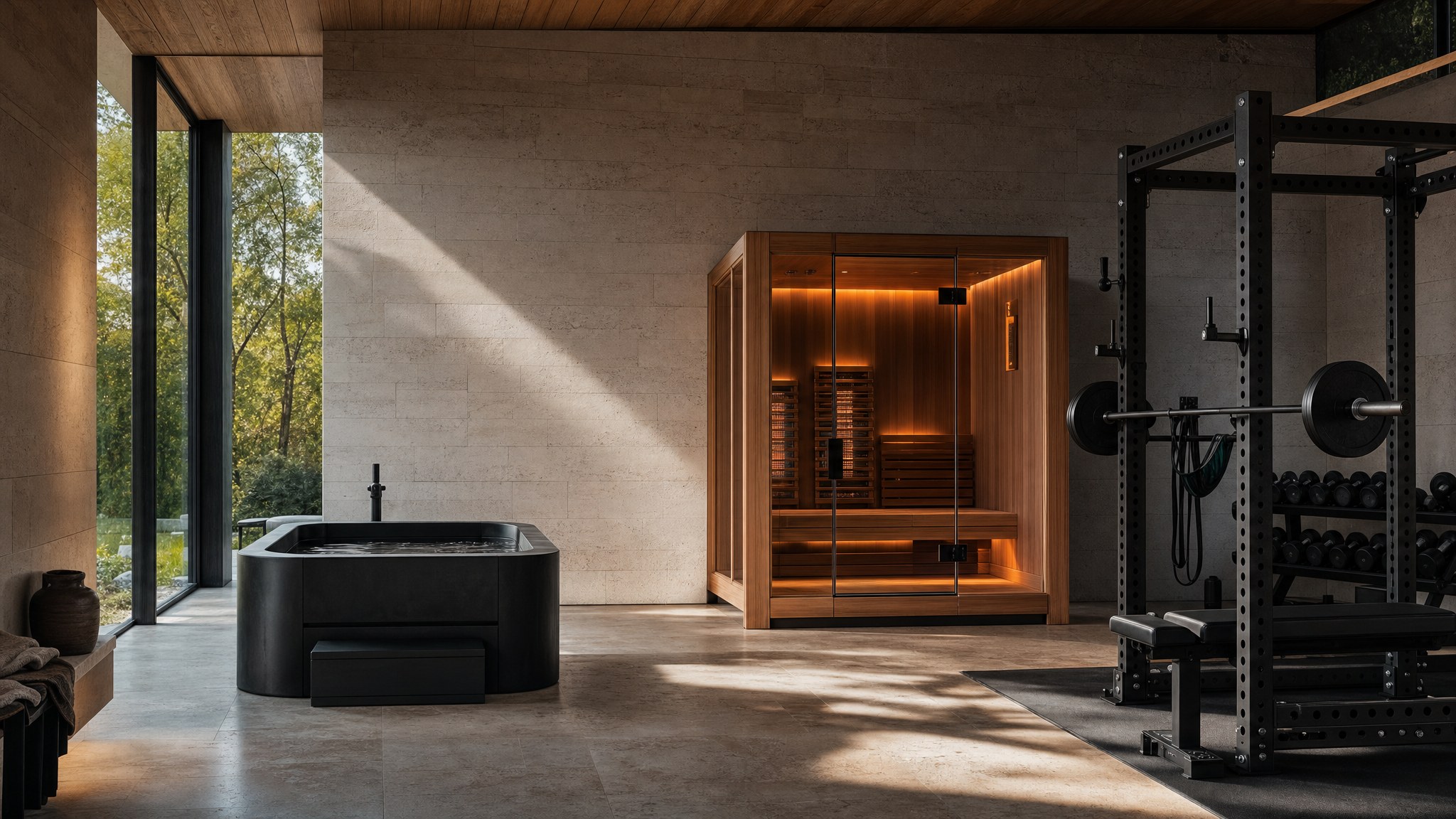
Home gym design
Home Gym Layout: Plan Your Room Before You Buy
Build a home gym layout around the room, your real routine and the clear space each piece of equipment needs.
Plan the layout →